


To truly understand how a collector looks at timepieces, one must look at how they approach life. For Daniel Vigone, co-founder of the authentic Italian establishment Mama Rosy in Jakarta, the thread connecting his world is one of family heritage, industrial design, and emotional resonance. Born in Albenga, Italy, and trained in industrial design in Milan, Daniel spent years in the textile trade alongside his father in Bandung before establishing his family's restaurant in Jakarta.
In this installment of HNMD People, host Fajar Abdillah sits down with Daniel to explore a eclectic collection shaped by deep research, nostalgic connections, and a distinct appreciation for neo-vintage rarities.
The Horological Roots
Daniel’s journey began around age seven when a friend of his father gifted him a Swatch Scuba—a watch he wore continuously, even to sleep. Later, for his 18th birthday, his father gave him an integrated-bracelet Bvlgari Aluminium. He wore it daily for nearly two decades, beating it up, scratching the rubber and alloy, and forging a lifelong bond with timepieces defined by design and personal history.
When he re-engaged with collecting years later in Indonesia, Daniel brought a designer's discipline to the hobby: he refrains from impulse buys, preferring to thoroughly research dial executions, movement mechanics, and historical contexts before acquiring a watch.
Collection Highlights
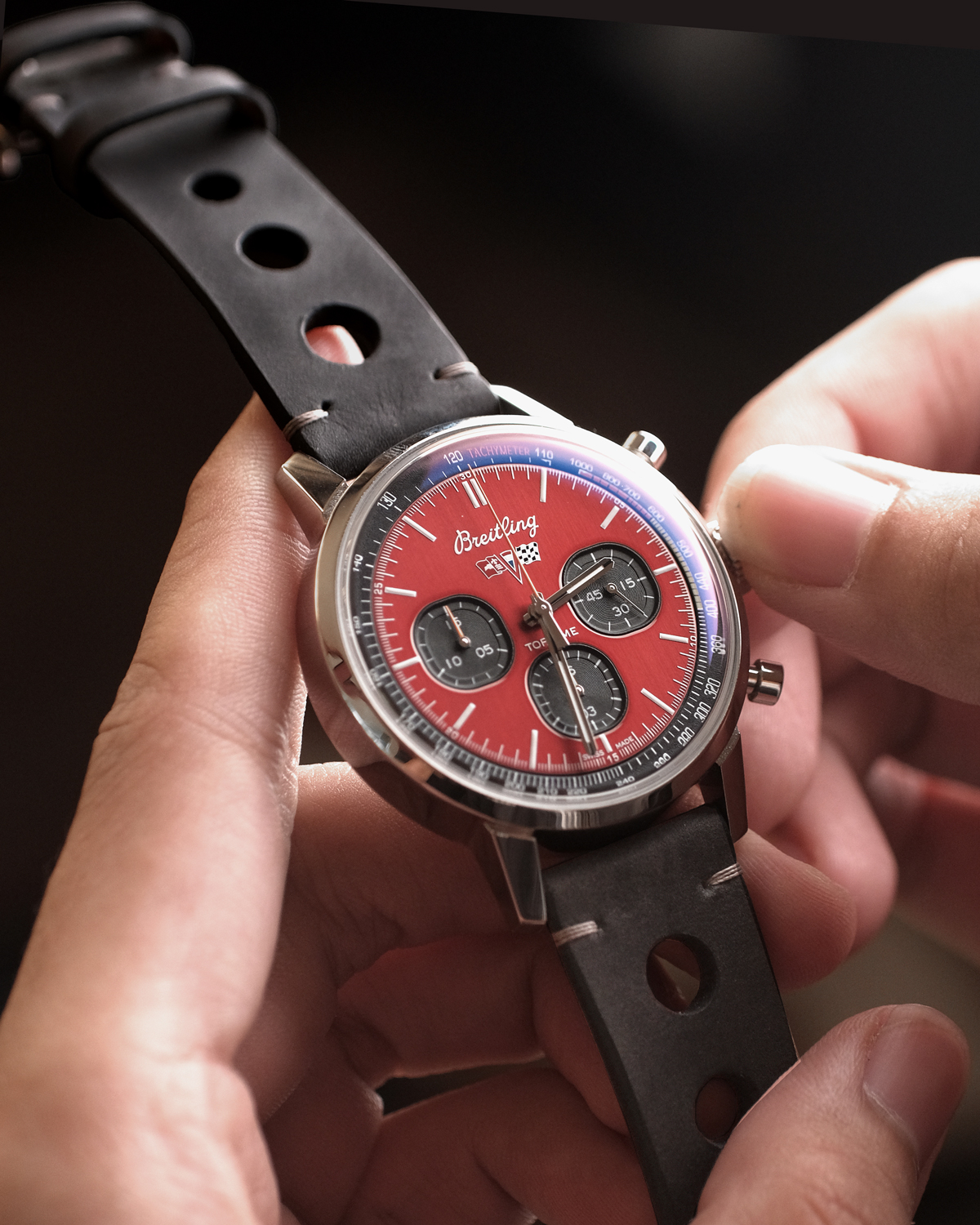
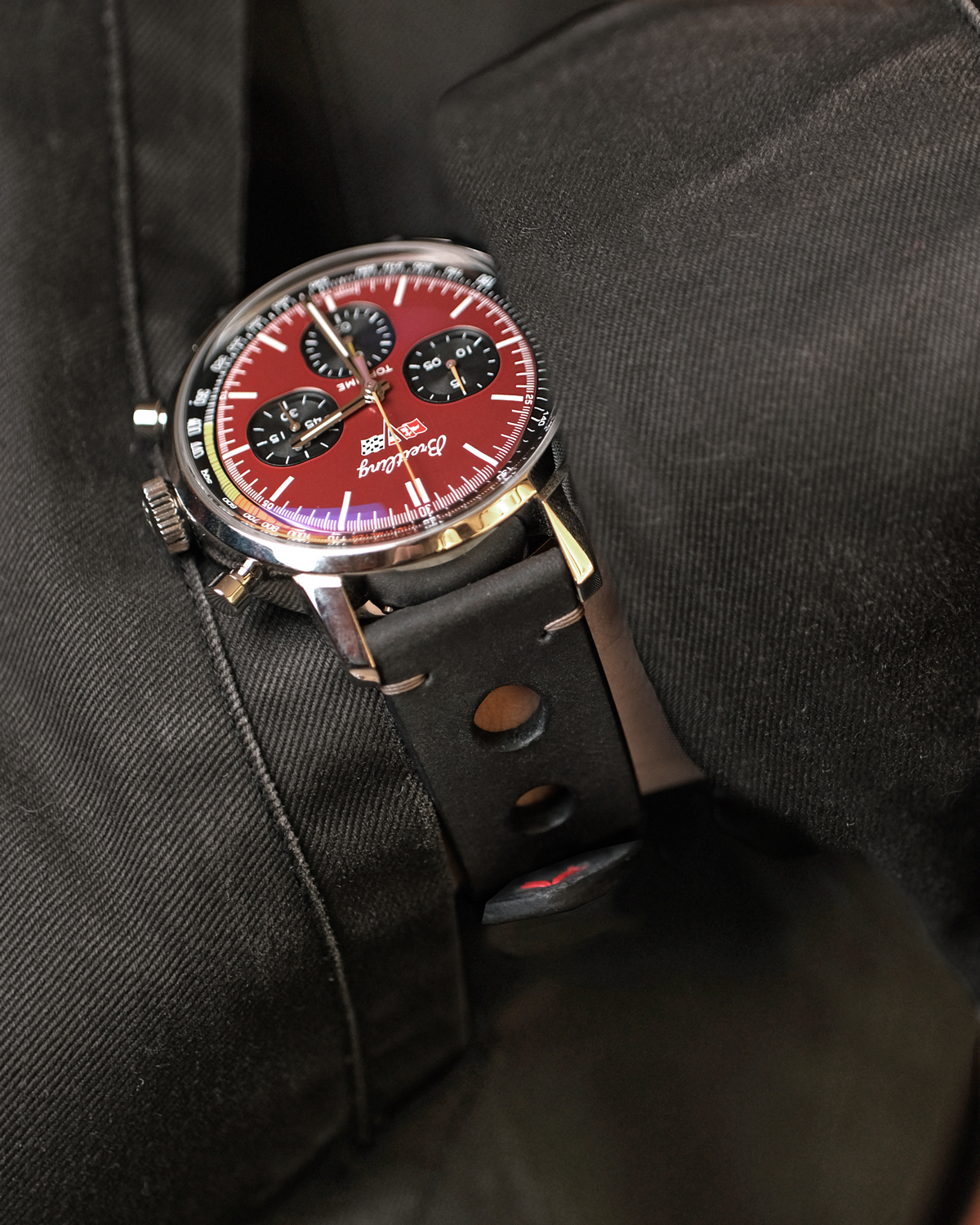
Breitling Top Time Chevrolet Corvette occupies a particularly distinct place in Daniel’s collection, encapsulating Willy Breitling’s original 1960s philosophy of creating unconventional, youth-oriented chronographs designed for speed and style. Inspired by the second-generation Chevrolet Corvette C2 Sting Ray (produced from 1963 to 1967), the watch pays homage to the legendary low-slung American sports car through its fiery red dial, complete with vibrant yellow and orange accents and the iconic Corvette cross-flags emblem stamped above the six o'clock position. In the first-generation Classic Cars iteration favored for its pure tool-watch aesthetic, Breitling housed the movement behind a solid, engraved stainless steel caseback rather than an open sapphire glass, reinforcing its rugged racing legacy.
What makes this model truly fascinating from a technical perspective is its unusual chronograph architecture. Driven by the COSC-certified Breitling Caliber 25 (a modified movement operating at 28,800 vibrations per hour), the watch features a rare 30-second central chronograph sweep. Rather than taking a full minute to complete one revolution, the central red chronograph hand travels around the dial in just 30 seconds, allowing for precise elapsed time readouts down to 1/8th of a second. Framed by vintage-inspired "squircle" sub-dials—a hybrid design combining squares and circles that mirrors classic 1960s dashboard gauges—and an outer tachymeter scale for speed calculations, the piece bridges high-performance automotive history with thoughtful horological engineering.
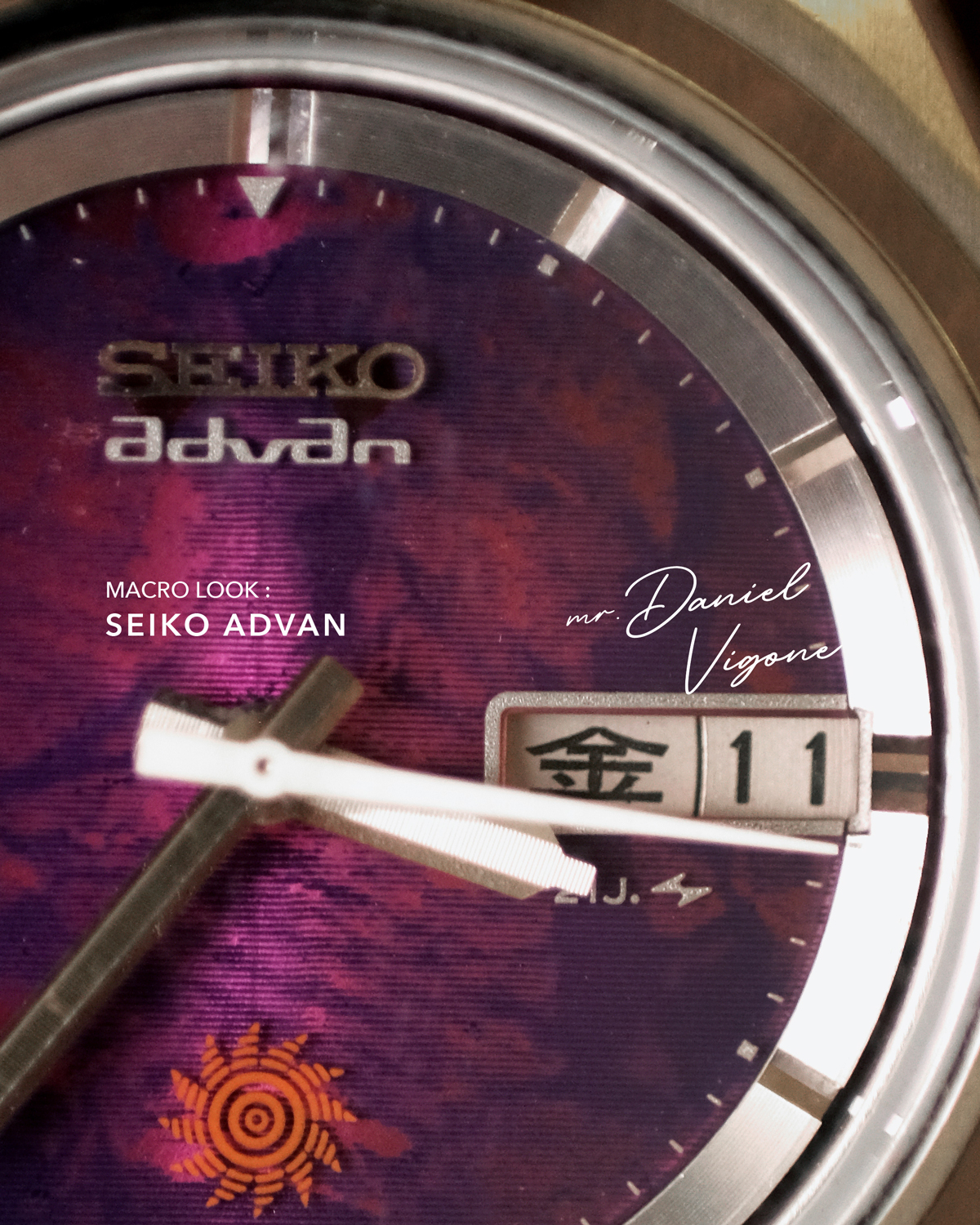
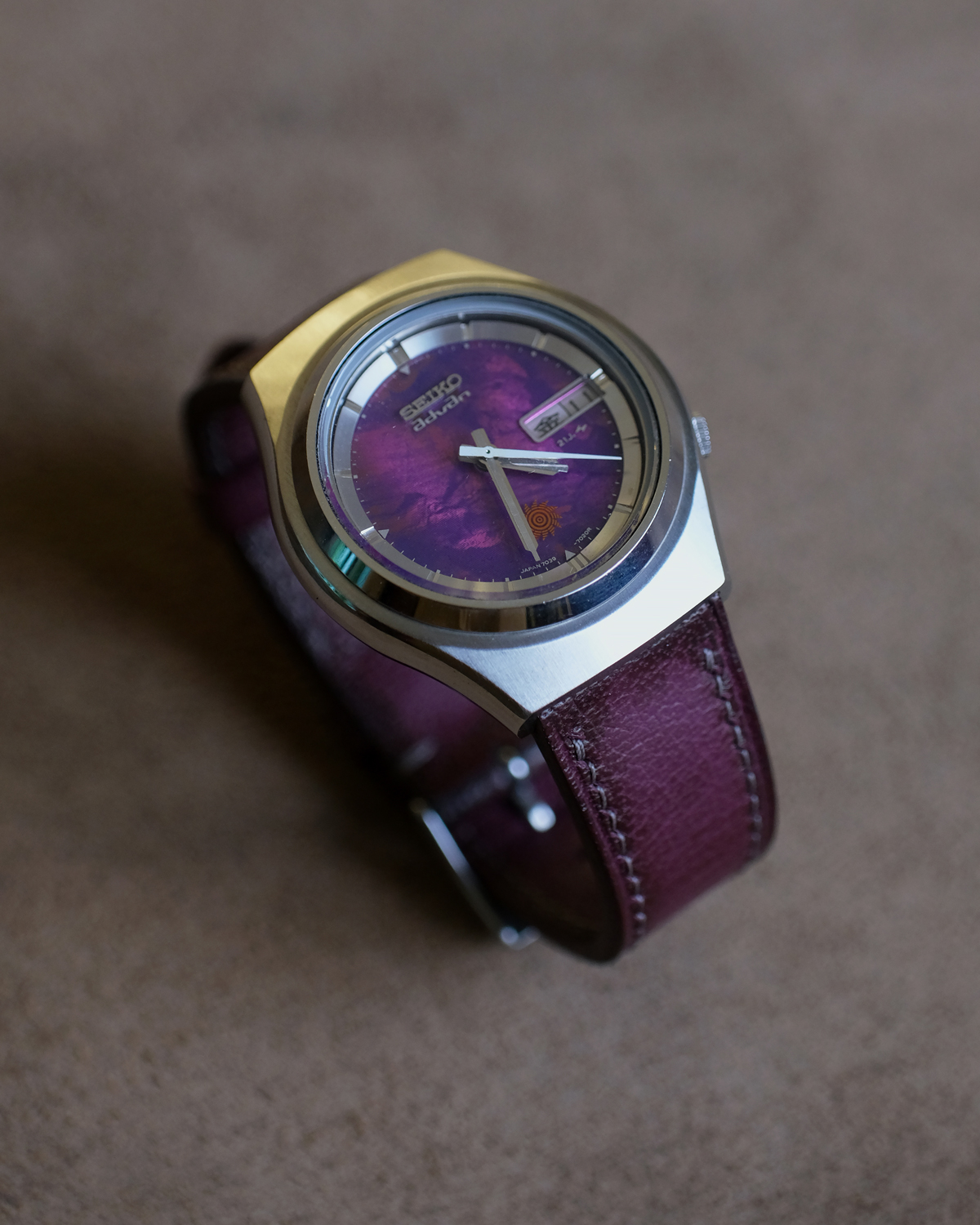
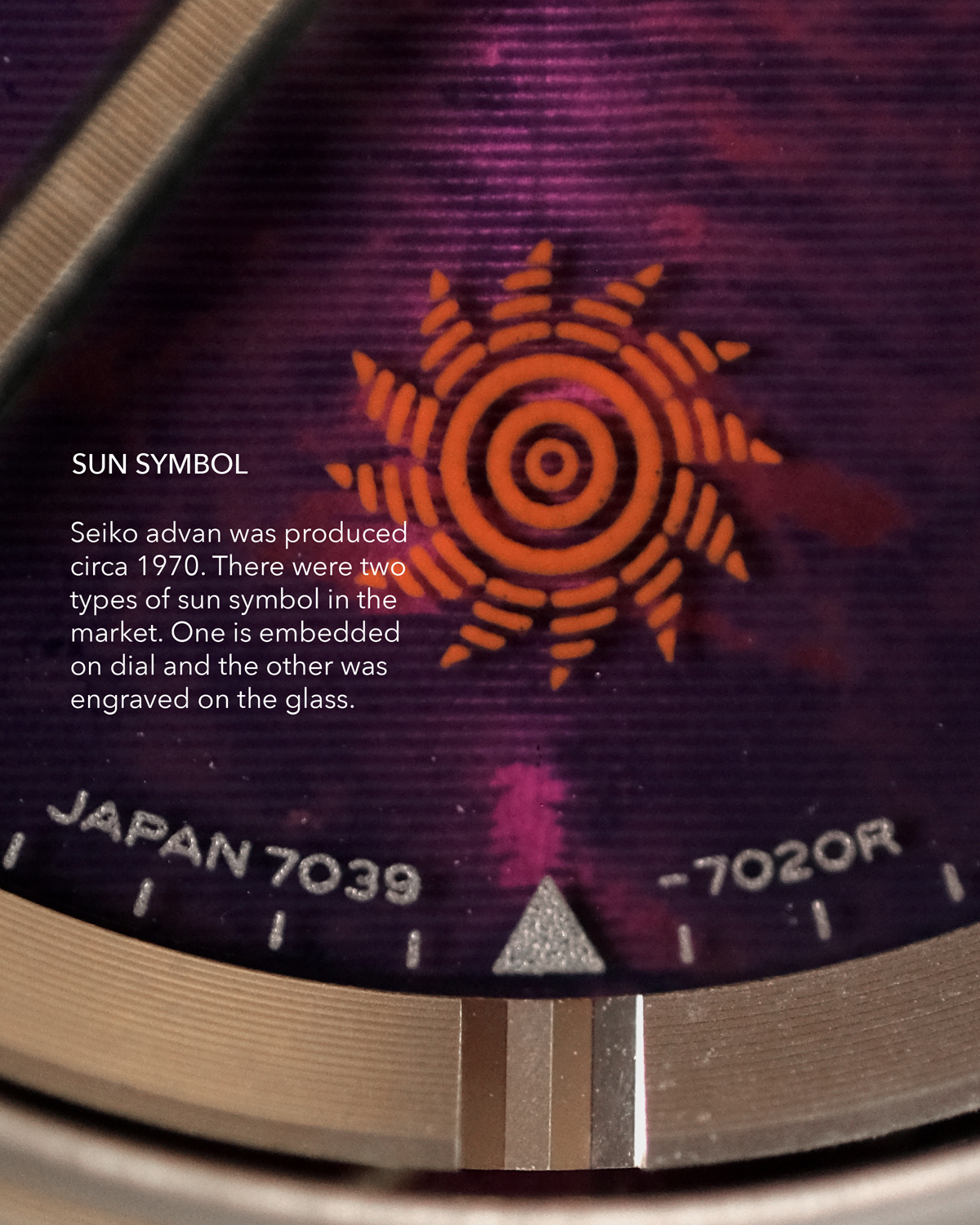
Seiko Linear Advance represents a fascinating chapter of Japanese horological history where artistic experimentation and industrial utility converged. Emerging from an era when Seiko was aggressively pushing the boundaries of both quartz technology and case ergonomics, the Linear Advance series stood out for its non-traditional dial aesthetics and geometric case sculpting. Known for playing with light and texture, these pieces moved away from standard monochrome tool-watch conventions to experiment with vivid, painterly dials, precise multi-faceted crystals, and durable surface treatments designed to withstand the rigors of daily wear.
For Daniel, the true genius of the watch lies in its atmospheric purple dial and its unusually thoughtful dial printing. The rich, stormy hue shifts dramatically under different lighting, giving the piece a chameleon-like personality on the wrist. Rather than placing crucial branding elements solely on the protective glass—a practice that risks losing the watch's identity during service or crystal replacement—Seiko printed its bright orange logo directly onto the dial surface itself. Combined with a robust Japanese movement engineered for long-term serviceability, the Seiko Linear Advance embodies the quiet, design-led details that collectors cherish: a vintage piece built with longevity in mind, where thoughtful manufacturing ensures the artwork remains intact across decades of wear.
As our discussion unfolded, the insights only grew richer. You can stream the complete episode on HNMD’s YouTube channel via the link provided to dive deeper into Daniel Vigone’s story, vintage timepieces, and design philosophy. Enjoy this installment, and look forward to future episodes featuring equally inspiring guests from the community.
Prefer this publication in Google Search